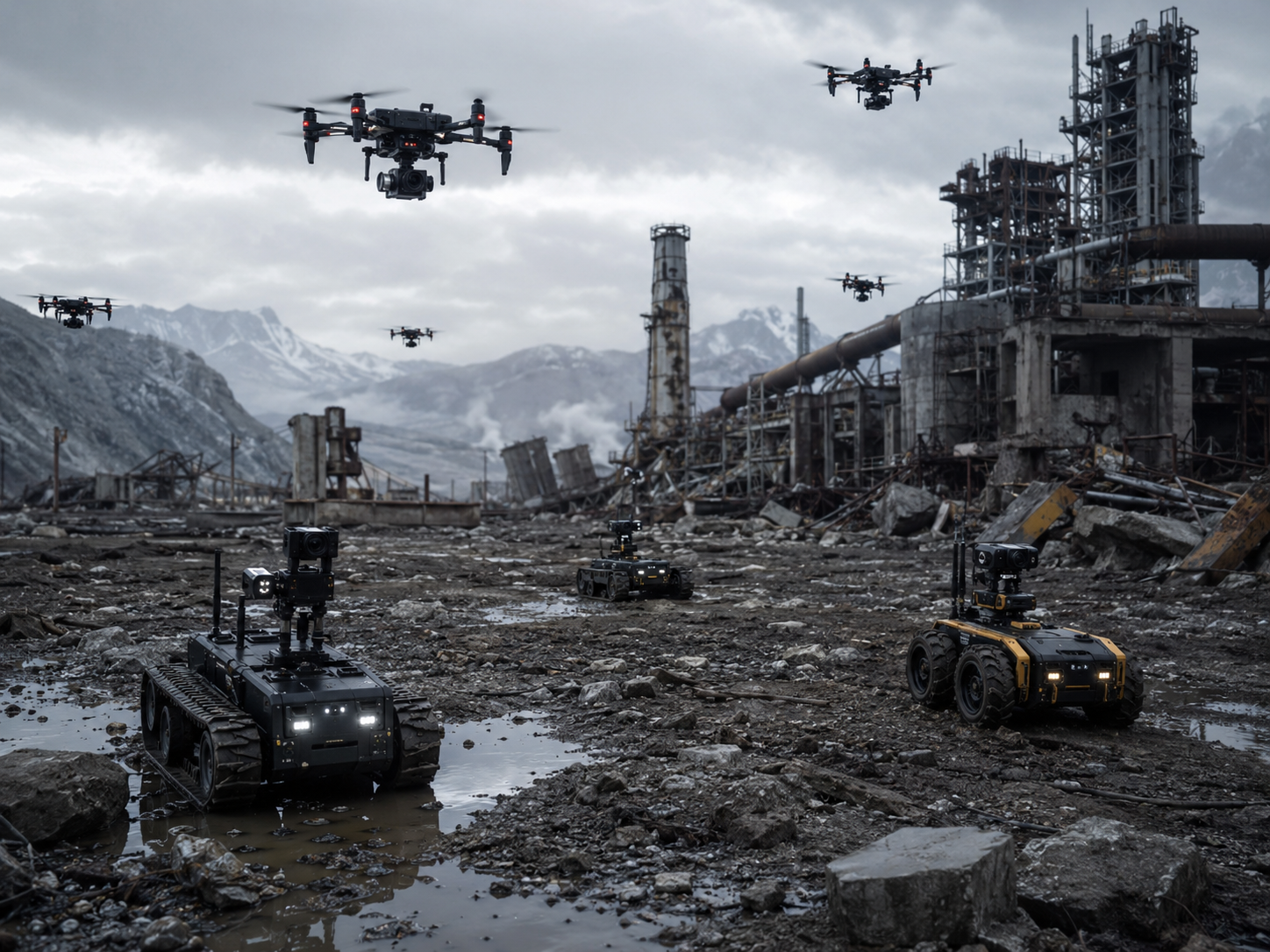
A multi-agent drone team enters a storm-damaged industrial site after the main network fails. One unit detects a blocked access road. Another spot a heat anomaly near a storage area. A third loses signal behind a concrete structure.
The mission does not stop because one device is disconnected.
It starts to fail when every unit needs too many updates from the others to know what to do next.
That is the coordination tax.
In autonomous systems, communication is often treated as a support layer. More agents, more sensors, more data, more updates. The assumption is that better coordination comes from more sharing.
At a small scale, that can work.
At mission scale, it breaks.
Every message consumes bandwidth, energy, time, and attention. Every update can arrive late. Every central dependency adds another place where autonomy can stall. For Physical AI, the problem is not only whether a robot, drone, vehicle, or satellite can make a local decision. The harder question is whether a mission community can coordinate under limited, delayed, and unreliable communication.
AstraQua’s position is clear: coordinated autonomy cannot depend on constant communication. It has to be designed to operate when communication becomes expensive.
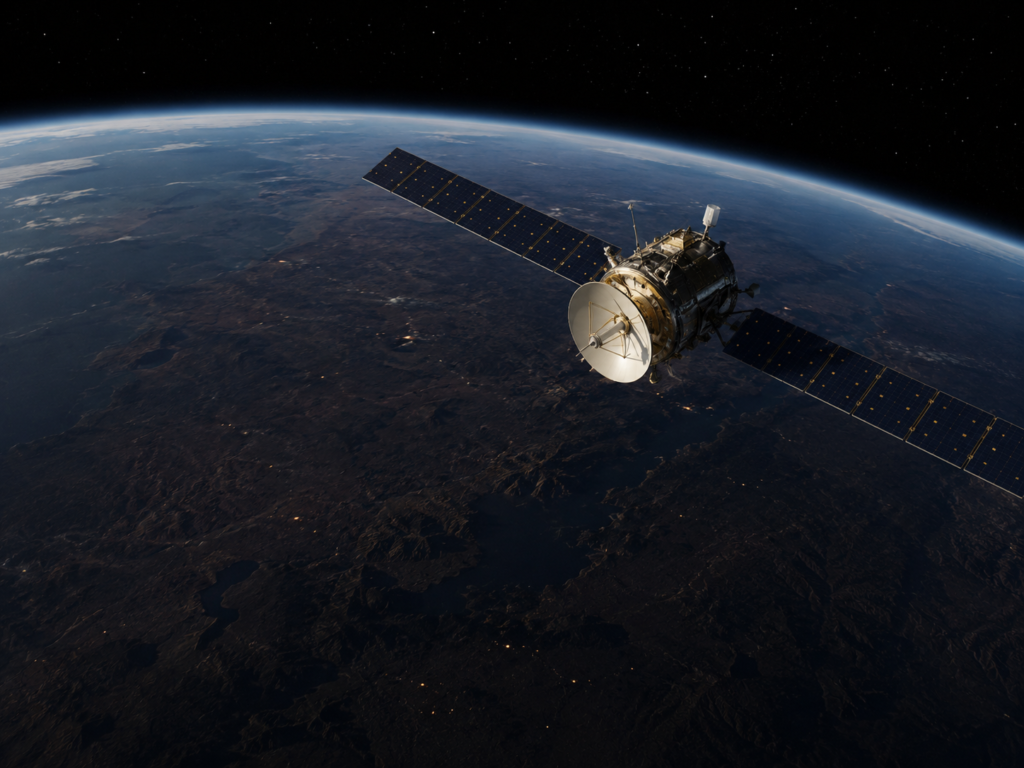
A satellite orbiting Earth above a dark, remote region, with a subtle sense of isolation or limited communication.
Communication Is Not Free
In cloud software, communication can feel nearly invisible. Services call other services. Logs stream. Models fetch context. Systems synchronize continuously.
Physical systems do not operate in that world.
For autonomous systems software in real-world operations, communication has a cost. It uses power. It adds latency. It competes with mission-critical signals. It can fail because of terrain, distance, interference, weather, congestion, or limited line of sight.
Research on networked control systems consistently identifies limited data rates, latency, and packet loss as core constraints in systems that coordinate over communication networks. These constraints directly affect stability, responsiveness, and control quality.
That means the communication layer is not just an infrastructure issue. It shapes what autonomy can safely do.
A multi-agent team that requires constant synchronization is not truly autonomous. It is remote coordination with extra steps.
The Coordination Tax Grows With Scale
The coordination tax is the operational cost of keeping distributed systems aligned.
It includes:
- Bandwidth used to share state
- Energy spent transmitting and receiving
- Latency added by waiting for updates
- Compute is used to process messages
- Risk introduced by stale or conflicting information
- Operator burden from too much low-value data
As a mission community grows, the tax increases quickly. Ten systems do not create twice as much communication as five. Depending on the architecture, they may create many more relationships to maintain, more conflicts to resolve, and more data to filter.
This is where many autonomy programs hit a wall.
The issue is not that each unit lacks intelligence. The issue is that the group becomes too dependent on communication to behave intelligently together.
Multi-agent systems research has long treated random delay, packet loss, and environmental noise as real constraints in wireless coordination, not edge cases. More recent work on communication-constrained multi-agent reinforcement learning also focuses on selective communication because limited bandwidth can delay decisions and weaken cooperation.
The lesson for operators is practical: coordination must be selective, not constant.
Why “More Data” Can Make Autonomy Worse
More communication can improve awareness, but only up to a point.
After that point, it can slow the mission down.
If every unit shares every observation, the autonomy layer has to decide what matters. If every update is treated as urgent, the system cannot prioritize. If a central controller waits for a complete shared picture, action slows while the world keeps changing.
This matters in AI for real-world operations because data is often incomplete by the time it arrives.
A satellite may downlink after a communication window. A vehicle may reconnect after leaving a corridor. A robot may share a hazard map after it returns from a low-signal zone. That information may still be useful, but only if the AI autonomy platform understands time, uncertainty, and relevance.
Delayed data is not automatically bad data.
But delayed data cannot be treated like live truth.
Physical AI needs to reason about what is current, what is stale, what is still actionable, and what should be ignored. Without that judgment, communication becomes noise.
Central Command Does Not Scale Cleanly
Centralized orchestration is attractive because it gives operators a single control point.
It is also fragile.
If every agent depends on a central system for tasking, routing, conflict resolution, or approval, the mission inherits the weaknesses of that central link. When communication degrades, autonomy narrows. When the central system receives delayed data, decisions can be based on an outdated picture. When bandwidth becomes constrained, only part of the mission state may arrive.
This does not mean central oversight has no role.
It means central oversight should guide mission intent, not micromanage every decision.
Coordinated autonomy needs a different pattern:
- Local agents handle local decisions.
- The mission community shares only meaningful updates.
- The system reconciles delayed information when links return.
- Operators receive compressed mission state, not raw overload.
- The autonomy layer continues functioning when central coordination is limited.
This is where agentic AI matters. Agentic systems are not just reactive. They track goals, context, constraints, and state. In coordinated autonomy, that means each unit understands enough of the mission to act without asking permission at every step.
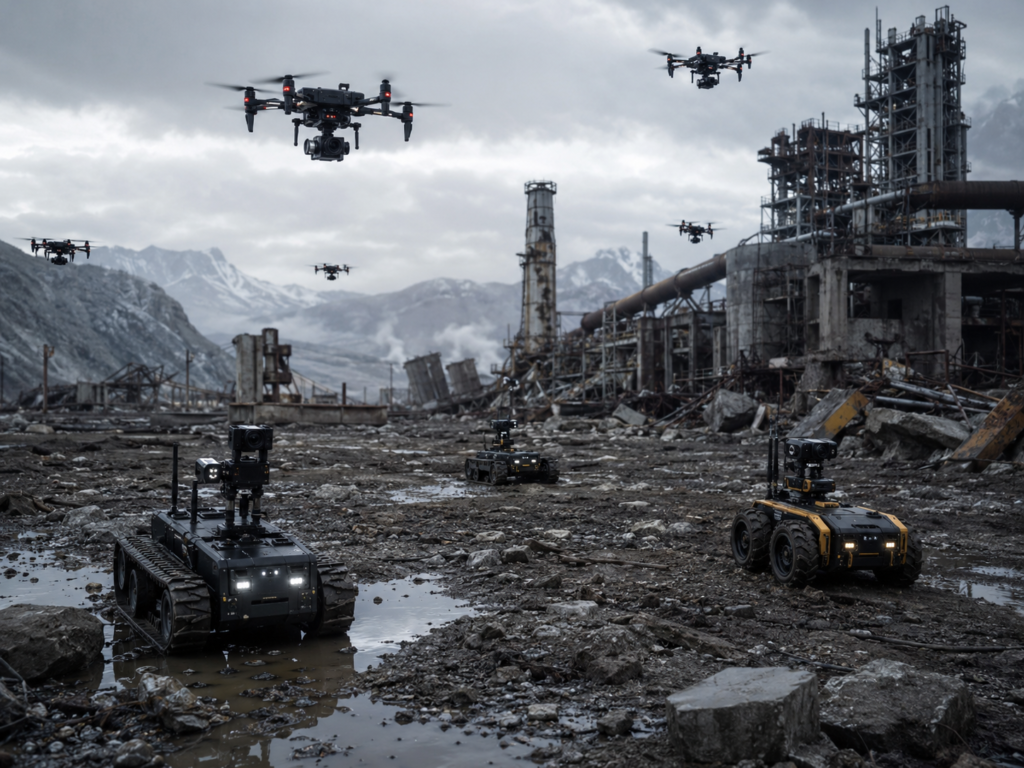
A group of drones or autonomous ground robots operating across a rugged industrial, disaster-response, or remote inspection environment.
A Practical Rubric: What Should Be Communicated?
The key to reducing the coordination tax is not silence.
It is disciplined communication.
Before deploying multi-agent autonomy, operators and embedded teams should ask five questions:
1. Does This Message Change The Mission?
If an update does not affect tasking, safety, timing, or shared awareness, it may not need to be sent immediately.
2. Can The Decision Be Made Locally?
If a unit can act safely with local context, waiting for a central response may increase risk rather than reduce it.
3. How Long Is This Data Valid?
Some information expires in seconds. Some remain useful for hours. The autonomy layer should treat those differently.
4. What Happens If This Message Arrives Late?
The system should know whether delayed information should update the plan, be archived, or be discarded.
5. What Must Be Shared For The Mission Community To Stay Aligned?
The goal is not maximum visibility. The goal is enough shared state to preserve coordinated action.
This rubric reframes communication as a mission resource. Like energy and compute, it has to be budgeted.
What Communication-Efficient Autonomy Enables
Reducing the coordination tax does more than prevent failure.
It enables more capable autonomy.
First, it supports coordination under silence. A multi-agent team can continue executing mission intent even when links are intermittent.
Second, it enables health-aware reasoning. Each unit can account for its own power, thermal state, compute load, and communication status before choosing how much to share or request.
Third, it supports mission-level orchestration. Operators can define goals and constraints while the autonomy layer handles local tradeoffs, delayed updates, and shifting assignments.
Finally, it improves resilience. The system becomes less dependent on any single connection, server, or synchronized global view.
NIST’s AI Risk Management Framework identifies reliability, robustness, safety, security, and resilience as important characteristics of trustworthy AI systems. For Physical AI, those qualities depend heavily on how systems behave when information is incomplete, delayed, or unavailable.
The AstraQua View: Autonomy Must Coordinate With Less
AstraQua Inc builds agentic Physical AI for autonomous systems that need to decide, coordinate, and operate together without relying on the cloud.
The core shift is operational.
AI software for autonomy cannot assume that every unit can constantly report everything to everyone. That assumption creates brittle systems. It increases bandwidth demand, drains energy, adds delay, and pushes too much responsibility onto central coordination.
Reliable AI systems need to communicate less, but communicate better.
For AI in drones, AI in robotics systems, AI in industrial autonomy, and AI in advanced air mobility, the next stage of progress is not just better local inference. It is better coordination logic.
The mission community should know when to speak, what to share, what to keep local, and how to recover alignment after silence.
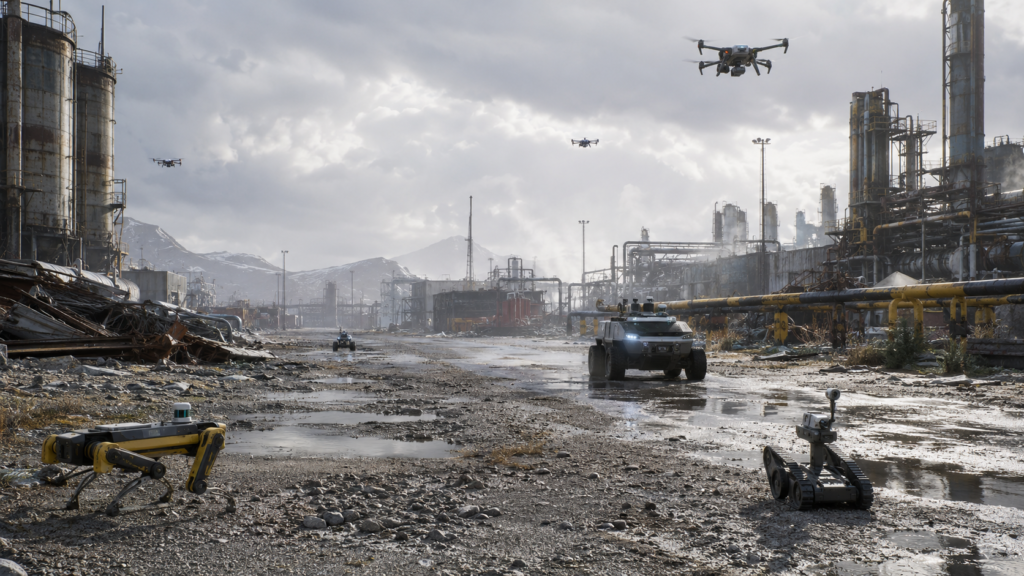
Multi-agent autonomous systems coordinating across a remote mission environment
The Future of Autonomy Is Not Constant Connectivity
Autonomy at scale will not be solved by streaming more data to a central system.
That approach creates a coordination tax the physical world cannot always afford.
The systems that succeed will be selective. They will communicate with purpose. They will act locally, synchronize when useful, and preserve mission intent when communication drops. They will treat bandwidth, latency, power, and operator attention as limited resources.
That is what must change.
Autonomy cannot be built around the fantasy of a perfect shared state. Real missions are delayed, noisy, partial, and resource-constrained.
The next generation of Physical AI must coordinate through that reality, not around it.
Learn more about edge-first, power-aware coordinated autonomy at www.astraqua.com.