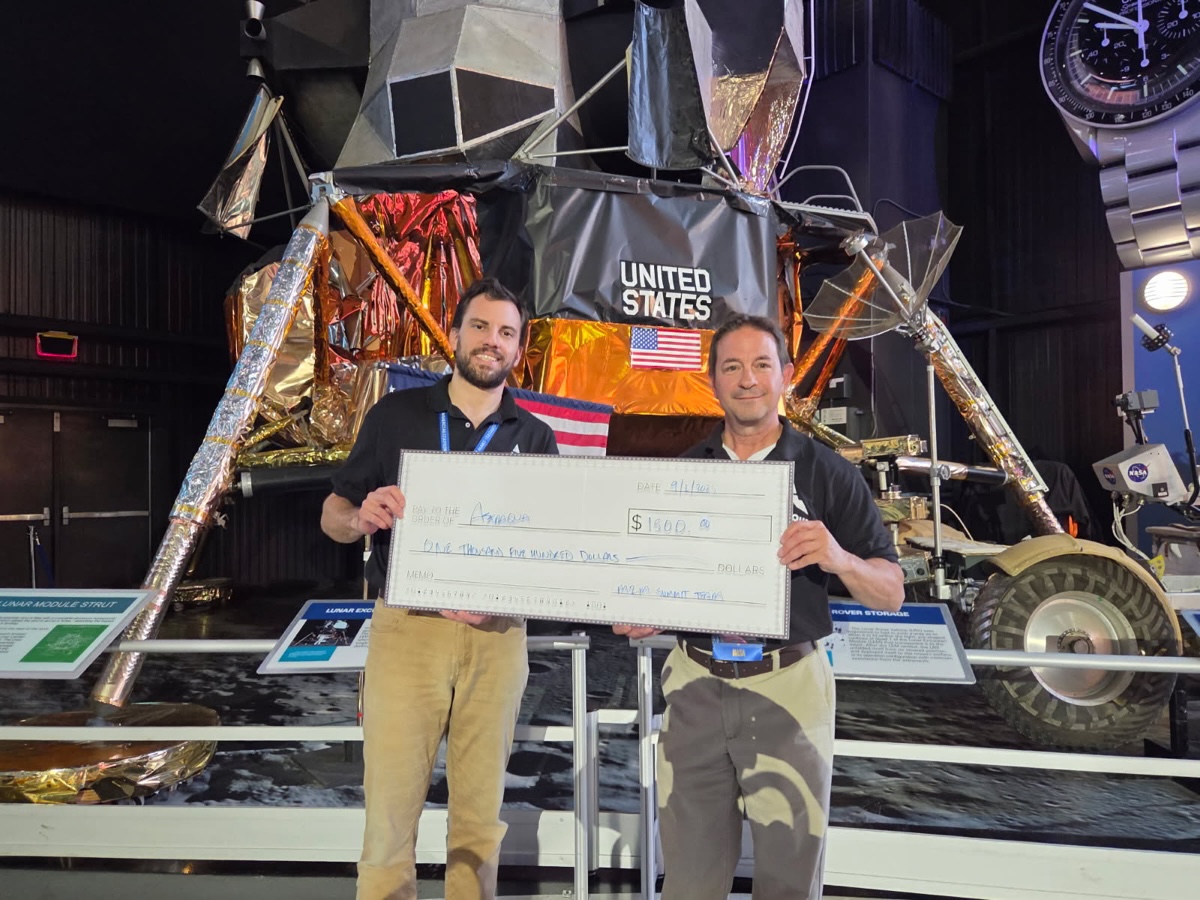
NASA Technology Transfer and the summit organizer recognize AstraQua’s second-place finish at the Huntsville technology commercialization event.
Event date: September 2, 2026
AstraQua earned second place in the Civil Space Shortfall Solution Challenge at the Moon to Mars Technology Commercialization Summit, held on September 2, 2026 at the U.S. Space & Rocket Center in Huntsville, Alabama. NASA Technology Transfer and summit organizer Jeffrey Johnson both identified AstraQua as the second-place team.
The challenge brought technology commercialization into the discussion of civil space needs. It formed part of a summit connecting founders, technology teams and the wider space ecosystem around the potential for applications in space and on Earth.
NASA Technology Transfer’s account described AstraQua’s work in energy-efficient computing and AI for autonomous systems, including robots, drones, satellites and spacecraft. Its summary highlighted systems understanding their surroundings, making decisions and monitoring their own condition. These are the operating problems that connect the company’s autonomy and machine-health work.
Helio Raven took first place, with KeenAI third. NASA Technology Transfer’s results announcement and the organizer’s recap provide the original competition record; the summit website records the date and venue.
For the technology context behind AstraQua’s participation, explore AstraQua’s autonomy solutions.